
 Webinar Cafe
How to collect useful webinar feedback and reviews
From the Cafe Counter ·

A rating can tell you how attendees felt about a webinar. A comment can tell you why. Collecting both gives you something more useful than a registration count when you plan the next session.
Keep two purposes in mind. Private feedback helps you improve the event; a public review helps someone else decide whether a session or publisher is worth their time. Make it clear which kind of response you are asking for and where it will appear.
Ask questions you can act on
A short follow-up is easier to answer than a long survey. Ask what helped, what was unclear, and which question the attendee still needs answered. If you are considering a specific change, ask about that: "Was there enough time to follow the demonstration?" gives you more direction than "Did you enjoy it?"
Invite honest responses from attendees generally, rather than asking only people who praised the session. A few enthusiastic comments are useful, but they do not represent everyone who registered. Look for repeated themes and keep the number of responses in view.
Public reviews can help readers judge relevance when they explain the topic level, the teaching, and the limits of the session. Do not promise a search-ranking benefit from collecting reviews. The practical reason to ask is to help readers and improve the event.
Share the webinar's review link
On Webinar Cafe, reviews belong to the individual webinar. After the session has started, a publicly available listing can show a Ratings and reviews section with a Rate or review this webinar link.
- Open the webinar's public listing and confirm that its title and publisher match the session you hosted.
- Find Ratings and reviews and follow Rate or review this webinar.
- Copy the review page address from your browser. Use the public page address, without a personal confirmation token or account-specific parameters.
- Add that link to your follow-up email or website with clear text, such as "Rate this webinar on Webinar Cafe."
- Open the link in a signed-out browser window before sending it to attendees.
If the review option is absent, check that you have opened a past, public listing rather than an upcoming event or private preview. Attendees can leave a star rating without a written comment. The form explains any email confirmation needed to publish their response.
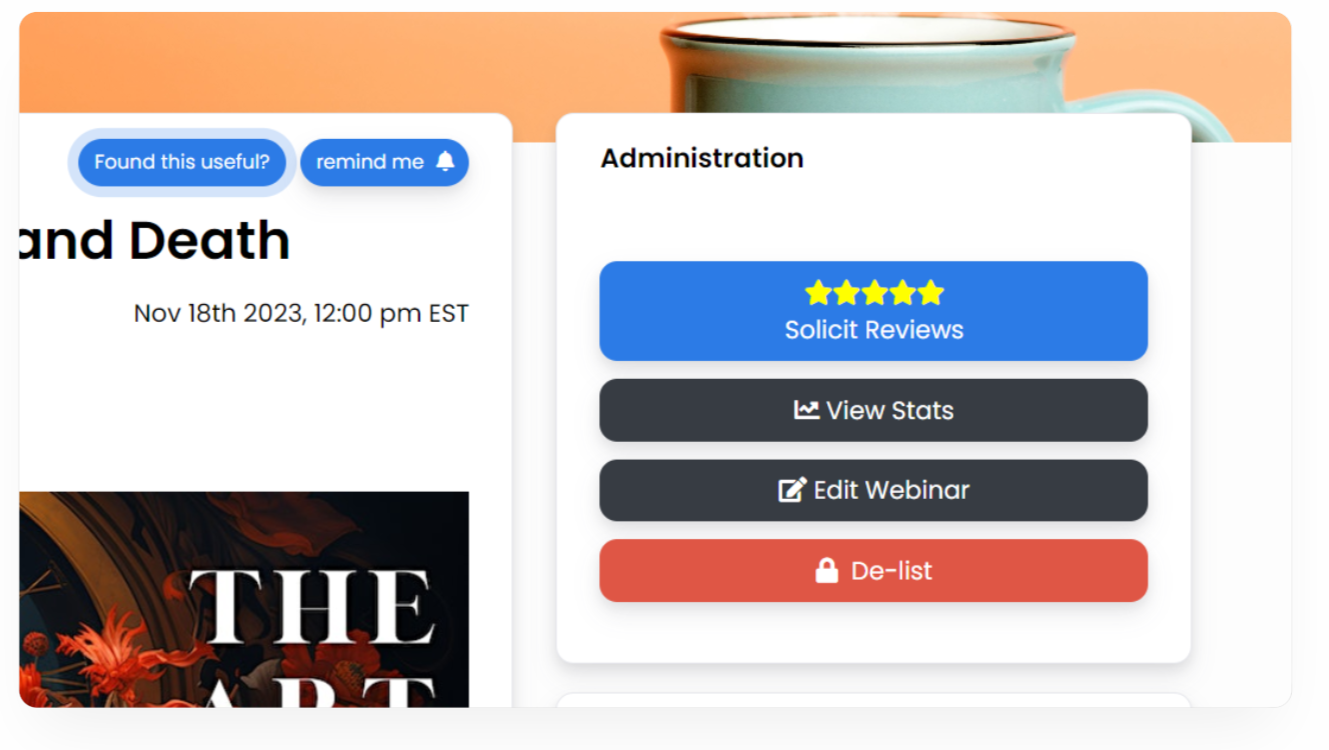
The image below shows the earlier review-request interface. It is retained as a historical example; the button and popup shown are not the instructions for the current site.
Add the request to an email or webpage
A plain text link is enough. If you use a button, give it a descriptive label and check that it points to the correct webinar. When handing the request to a developer or content editor, provide the destination URL, label, and where the link should appear. Do not paste HTML into an email editor unless you are using its HTML editing mode.
Keep the request close to the recording or resources you promised. For example: "Thanks for joining the session. What helped, and what could we explain better next time? You can leave a rating or review on Webinar Cafe." A social post can use the same public link, but should ask people who attended to respond.
Explain that a public review will be visible to other readers. If you also offer a private feedback form, label that separately. Ask for permission before reusing someone's words in promotional material.
Use the feedback before planning another session
Group responses by the changes they suggest: content, pace, technical access, or unanswered questions. Compare them with the questions raised during the webinar. One report of an audio problem may need investigation; several comments about a rushed demonstration may mean it needs more time.
Choose a change you can make, assign someone to handle it, and carry it into the next rehearsal. When you follow up with attendees, answer unresolved questions where you can. Asking for feedback is useful only if someone reads it and decides what to do next.